Journal · Skin · evidence
Sleep, hydration and the face: the cheapest levers with real evidence
Sleep deprivation measurably changes how a face is judged: observers rate sleep-deprived faces as less healthy, less attractive and more tired, with darker under-eyes and hanging eyelids. Extra water helps skin hydration only in people who drink little. Smoking, heavy alcohol and chronic stress age skin visibly. These are the cheapest levers with real evidence.
A claim should come with its context.
Evidence levels describe support for a claim, not a guaranteed result.
Read the methodologyInside this article
Find the part you need.Why start with sleep rather than a product?
Most looksmaxxing advice starts with something you buy. This article starts with the things that cost nothing, because a few of them have better evidence than most of what is sold. They are also the levers that a rating from one photo is most sensitive to: the eye area and the skin are two of the five areas BecomeTen scores, and both respond within days to how you slept, and within months to whether you smoke.
The honest caveat is that “lifestyle” is where the vaguest claims live. So the rule here is the same as everywhere on the site: each lever gets the evidence that exists for it, no more. Where the effect is modest, we say modest. Where there is no study, we say so. The looksmaxxing guide covers the paid levers; this page is the free ones.
What does sleep deprivation do to how a face is perceived?
This is the best-evidenced item on the page, and unusually the evidence is about perception rather than skin chemistry. Researchers photographed the same people after a normal night and after being kept awake, then had strangers rate the photographs without knowing which was which.
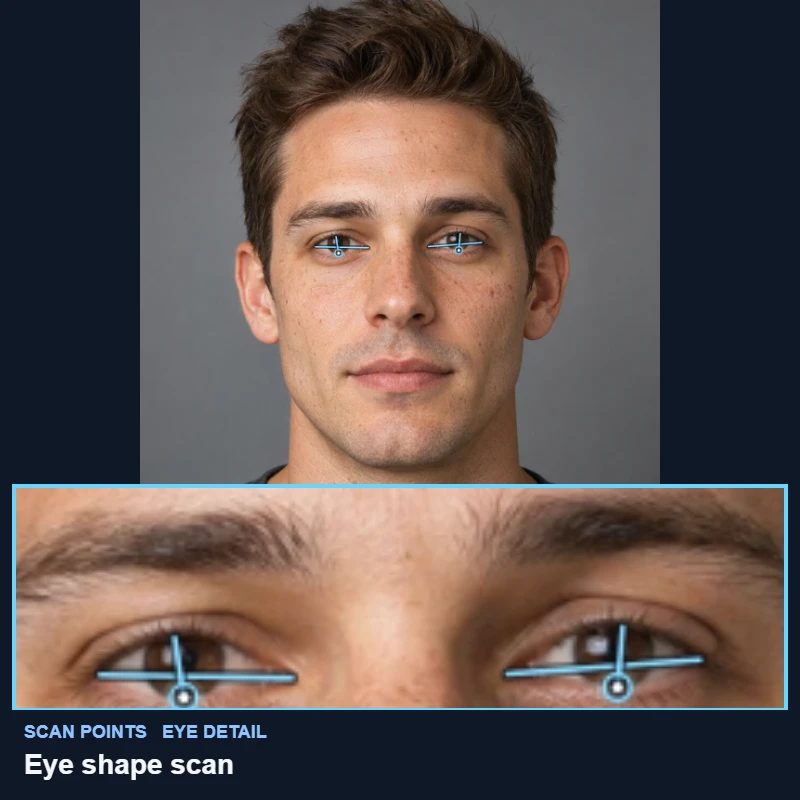
Two things follow. First, most of that list is the eye area, which is why the under-eye article treats sleep as the one fast lever there. Second, the effect is on the photograph, not the anatomy: nothing about your orbit changes when you sleep, but the fluid, eyelid tone and skin colour over it do, and a camera catches exactly those. A scan after two bad nights measures the bad nights.
Does drinking more water change the skin?
Less than the internet says, and more than nothing. A 2015 study in Clinical, Cosmetic and Investigational Dermatology gave healthy adults an extra daily intake of water for a month and measured skin hydration and biomechanics. The people who benefited were the ones who had been drinking little to begin with; in them, superficial and deep skin hydration improved. In people already drinking a normal amount, adding more did little.
So the practical reading is narrow. If you routinely drink very little, correcting that is a real, cheap skin lever. If you already drink normally, a third litre is not a skincare step, and it will not clear acne, fade pigment or change texture, because those are not hydration problems. Hydrated skin scatters light more evenly and shows fine lines slightly less, which is the whole of the effect, and it sits inside the skin area's cap rather than adding to it.
What do smoking and alcohol do to a face over time?
Smoking is the strongest negative lever on this page, and the evidence for it is old and consistent. A 2007 review in the Journal of Dermatological Science summarised the mechanisms by which tobacco smoke ages skin prematurely: reduced blood flow to the dermis, breakdown of collagen and elastin, and the repeated mechanical creasing around the mouth and eyes. The clinical picture is deeper wrinkling, a greyer and more uneven tone, and slower healing.
A 2019 study in the Journal of Clinical and Aesthetic Dermatology looked at women and graded facial aging against smoking and alcohol history. Current and heavy smokers showed more upper-lip lines, under-eye puffiness and loss of midface volume than never-smokers, and heavy drinking was associated with more visible signs as well, with the effect strongest at high intake. Moderate drinking showed much smaller differences. The point for a plan is that both levers are dose-dependent and both act on the skin area first.
Alcohol has a second, short-term effect that matters for a scan: the night before, it dehydrates and then causes fluid retention, which reads as puffiness and a duller tone the next morning. That is a capture problem rather than an aging problem, and it is why the progress-tracking article says to rescan under the same conditions, not after a party.
Does stress show on the skin?
The mechanism is well described; the size of the effect in a photograph is not. A 2014 review in Inflammation and Allergy Drug Targets set out what is now called the brain-skin connection: chronic psychological stress raises cortisol and inflammatory signalling, which impairs the skin barrier, slows wound healing, and worsens conditions such as acne, eczema and psoriasis. Over years, the same pathways contribute to visible aging.
What that does not give you is a number, and we will not invent one. Stress does not show on a face the way a bad night does; it shows through flare-ups and through the sleep it takes away. The useful version is indirect: if stress is wrecking your sleep, the sleep evidence above is the evidence for fixing it.
Which BecomeTen areas do these levers touch?
| Lever | Area it touches | Speed | Evidence |
|---|---|---|---|
| Consistent sleep | Eye area, skin | Days | Rater studies (BMJ 2010, Sleep 2013); skin aging association (2015) |
| Adequate water, if intake was low | Skin | Weeks | One controlled study, modest effect, only in low drinkers |
| Not smoking | Skin; over years, the lower third | Months to years | Consistent observational evidence and mechanism |
| Less alcohol | Skin; puffiness on the day | Days for puffiness; years for aging | Dose-dependent association |
| Managing stress | Skin, via sleep and flare-ups | Indirect | Mechanism well described; no photo-level trial |
None of these is a structural lever. They move the skin (+25) and eye-area (+10) shares, skin carrying the largest non-surgical cap in the rating, and they change nothing about bone. That is exactly why they are cheap: the workable parts of a face are the soft, changeable ones, and these are the inputs that feed them.
See how your skin and eye area currently read, then rescan after a normal week of sleep.
What to do this week
- Keep a fixed wake time for seven days, even at the weekend, and aim for a full night before any scan you intend to compare.
- Check what you actually drink in a day. If it is very little, bring it up to a normal amount; if it is normal, leave it.
- If you smoke, this is the single most valuable change on the page, and the skin effect is measured in months, so start the clock now.
- Skip alcohol for the two nights before a photo you care about, and notice the difference under the eyes.
- If stress is cutting your sleep, treat the sleep as the symptom to fix first; it is the one with the photograph-level evidence.
- Add daily sunscreen, the one paid lever that costs about as much as a coffee and has a randomised trial behind it.
Questions
Will drinking three litres of water a day clear my skin?
No. The one controlled study found better skin hydration only in people who had been drinking very little, and hydration is not what causes acne, pigment or texture. If your intake is genuinely low, correcting it helps the skin barrier a little; past that, extra water passes straight through and changes nothing in a photograph.
Should I rescan after one good night of sleep?
One night undoes some puffiness but not a week of poor sleep, and the rater studies compared normal sleep against acute deprivation, not one recovered night against a bad run. Rescan after a normal week under the same light and angle as the first scan; anything less and the comparison is mostly noise.
Does quitting smoking reverse the skin aging it caused?
It stops the process and lets the skin recover blood flow and some barrier function, and tone usually improves over months. Collagen already broken down does not come back on its own, so deep lines around the mouth stay; sunscreen and a retinoid can improve them slowly. The gain from stopping is large; the gain is not a rewind.
Do collagen or biotin supplements belong on this list?
Not on the evidence we hold. The library has entries on nutrition and skin aging and on fish-oil fatty acids, both of which describe mechanisms and diet quality rather than a supplement that visibly changes a face. Biotin has evidence only in deficiency. Money spent there is better spent on sunscreen, sleep and, if relevant, stopping smoking.
Sources
- 1.Cues of fatigue: effects of sleep deprivation on facial appearance — Sleep (2013)(Opens in a new window)
- 2.Beauty sleep: experimental study on the perceived health and attractiveness of sleep deprived people — BMJ (2010)(Opens in a new window)
- 3.Does poor sleep quality affect skin ageing? — Clinical and Experimental Dermatology (2015)(Opens in a new window)
- 4.Dietary water affects human skin hydration and biomechanics — Clinical, Cosmetic and Investigational Dermatology (2015)(Opens in a new window)
- 5.Tobacco smoke causes premature skin aging — Journal of Dermatological Science (2007)(Opens in a new window)
- 6.Impact of Smoking and Alcohol Use on Facial Aging in Women: Results of a Large Multinational, Multiracial, Cross-sectional Survey — Journal of Clinical and Aesthetic Dermatology (2019)(Opens in a new window)
- 7.Brain-skin connection: stress, inflammation and skin aging — Inflammation & Allergy Drug Targets (2014)(Opens in a new window)