Journal · Eye area · workable vs structural
How to fix dark circles: what is workable under the eye, and what is not
Dark circles are not one problem. A clinical review lists several causes: pigment in the skin, visible vessels through thin skin, and shadow cast by the shape of the orbit and the tear trough. Pigment, puffiness and skin quality are workable; orbital shape and hollowing from bone and fat distribution are structural. Sleep changes how the whole area reads.
Eye shape, spacing and the surrounding frame.
Explore eye areaInside this article
Find the part you need.Why are dark circles multifactorial?
The phrase “dark circles” covers at least three different things that happen to look alike in a mirror. The skin under the eye is the thinnest on the face, so anything beneath it shows through: excess pigment in the skin itself, the blue-red of vessels under it, and the shadow that a hollow casts when light comes from above.
This is why generic advice fails. A cream aimed at pigment does nothing for a shadow, and a concealer that covers a shadow does nothing for the puffiness that created it. Before anything else, it helps to know which kind you have. Stretch the skin gently: if the darkness fades it is mostly shadow from a hollow; if the colour stays it is mostly pigment; a blue-purple tone that persists points to vessels.
What does sleep actually change in how a face reads?
Sleep is the one under-eye lever with experimental evidence about perception rather than skin chemistry. In a 2010 study published in the BMJ, untrained observers rated photographs of the same people after normal sleep and after sleep deprivation, and rated the sleep-deprived faces as less healthy, less attractive and more tired.
A 2013 study in the journal Sleep asked what observers were actually seeing. Sleep-deprived faces were rated as having more hanging eyelids, redder and more swollen eyes, darker circles under the eyes, paler skin, more fine lines and more drooping at the corners of the mouth. Most of that list is the eye area. And a 2015 study associated poor sleep quality with more visible signs of skin aging, which points the same way over a longer horizon.
None of this changes the orbit. What it changes is fluid, blood flow, eyelid tone and the skin over them, which is exactly the set of things a camera catches under the eyes. Two poor nights before a scan will lower an eye-area score for reasons that have nothing to do with your anatomy, which is one reason we grade capture conditions and mark small differences as noise.
Which under-eye traits are structural?
Some of what reads as dark circles is the shape of the skull and the way fat sits on it. A deep-set eye, a prominent orbital rim or a tear trough where the cheek fat has migrated down leaves a hollow, and a hollow casts shadow under overhead light regardless of how well you slept. This is anatomy. Creams do not fill hollows and sleep does not rebuild bone.
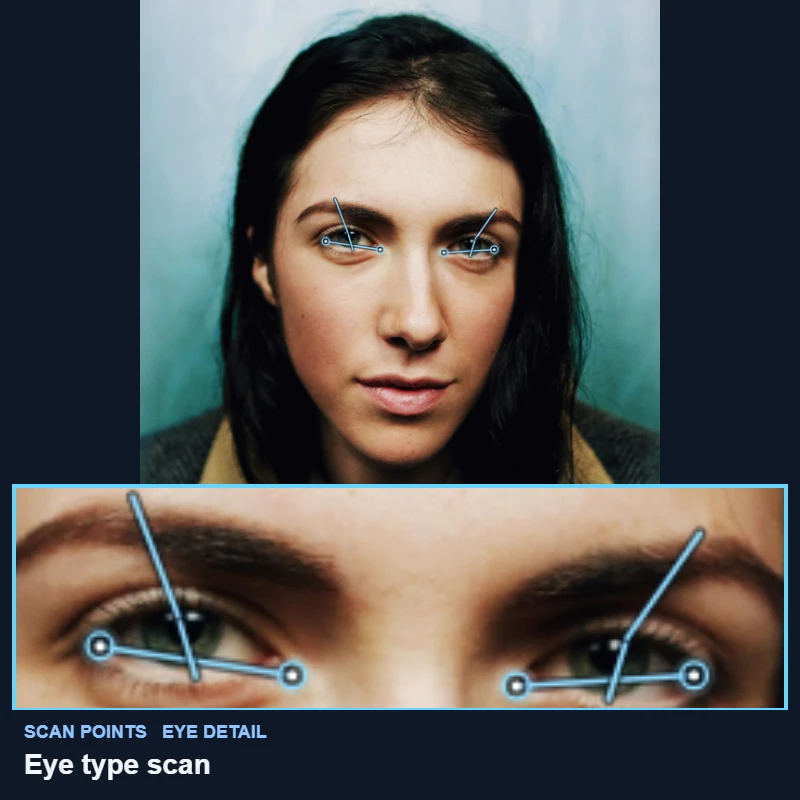
The same is true of the orbital traits the community talks about most. Canthal tilt is set by where the outer corner of the eye sits relative to the inner corner, and hunter eyes describe brow and orbital-rim geometry. Neither is changed by anything in a routine, and BecomeTen reports both as structural bands rather than degrees so that nobody is sold a fix for a bone.
One photo. Then stop guessing.
See which of your eye-area traits are tagged workable and which are structural.
Which under-eye traits are workable?
Four things under the eye move without a procedure, one of them only partly, and the 2009 review's classification maps onto them cleanly.
| Trait | Workable or structural | What actually changes it |
|---|---|---|
| Skin pigment | Workable, slowly | Daily sunscreen to stop it deepening; the review lists topical brightening approaches, which are a dermatologist conversation |
| Puffiness and fluid | Workable, fast | Sleep, less sodium and alcohol the night before, allergy control, sleeping with the head slightly raised |
| Skin thinness and fine lines | Workable, slowly | Sunscreen, a retinoid used carefully near the eye if a prescriber agrees, not smoking |
| Vessel show-through | Partly workable | Thicker, healthier skin hides more; the vessels themselves stay |
| Tear-trough hollow | Structural | Bone and fat distribution; body-fat changes can make it more or less visible |
| Orbital shape, canthal tilt, brow bone | Structural | Nothing non-surgical; hair, brows and grooming change only how it reads |
The honest summary: puffiness responds in days, pigment and skin quality in months, and hollows do not respond at all. If your report tags under-eye as a workable weak point, it is because the model is seeing pigment, puffiness or skin quality rather than a hollow.
Why is the eye-area cap only +10?
The eye area carries a quarter of the overall score in BecomeTen, more than skin, because it is what people look at first and longest. It also has a small non-surgical ceiling, +10 on the dimension, and the two facts are connected. Most of what makes an eye area read strong is orbital geometry, brow position and eye spacing, and all of that is bone. The workable share is real but thin: the under-eye skin, brow shape and how rested the whole area looks.
So an eye-area plan is short and specific. Sleep consistently. Wear sunscreen up to the lash line. Manage puffiness. Shape brows if the report flags it. Then stop, because the remaining gap is structural and no routine closes it. We would rather show you a +10 that is true than a +25 that assumes your orbit will change.
Procedures exist, and they are a doctor conversation
For the structural share, particularly the tear-trough hollow, injectable hyaluronic acid fillers are widely used, and a 2009 comprehensive review in Facial Plastic Surgery describes the evidence base, the products and the complications. We include that reference so you can read what exists. It is not a recommendation. BecomeTen does not recommend procedures at any tier, and the under-eye is one of the higher-risk areas for injection, which is exactly why it belongs with a qualified doctor and not with a rating app.
Questions
Are dark circles genetic?
Partly, and it depends on the type. Orbital shape and tear-trough depth are inherited, and so is a tendency to periorbital pigment, which runs in families and is more common in some skin tones. Puffiness, vessel show-through from thin skin, and the effect of poor sleep are largely not fixed. Knowing which type dominates for you tells you how much of it can change.
Do caffeine eye creams or cold compresses work?
Cold reduces fluid and constricts vessels briefly, which can soften puffiness and vascular darkness for an hour or two; it is a legitimate photo-day trick, nothing more. For caffeine creams there are no entries in our evidence library, so we label them as having no studies rather than pretending. Neither does anything for pigment or for a hollow.
Will losing weight fix under-eye hollows?
Usually the opposite. Losing facial fat reduces puffiness, which helps if fluid is the issue, but it also thins the fat pad that softens the tear trough, so a hollow tends to read deeper as body fat drops. This is the most common reason a leaner re-scan shows a better jaw and a flatter eye-area score at the same time.
How much does sleep change an eye-area score?
We will not give a number, because it varies with how much fluid and eyelid change your face shows. The perception studies say sleep-deprived faces are rated as more tired, less attractive and with darker circles; that is direction, not magnitude. Practically: scan after a normal week of sleep, not after a bad night, or the comparison is noise.
Sources
- 1.Infraorbital dark circles: definition, causes, and treatment options — Dermatologic Surgery (2009)(Opens in a new window)
- 2.Cues of fatigue: effects of sleep deprivation on facial appearance — Sleep (2013)(Opens in a new window)
- 3.Beauty sleep: experimental study on the perceived health and attractiveness of sleep deprived people — BMJ (2010)(Opens in a new window)
- 4.Does poor sleep quality affect skin ageing? — Clinical and Experimental Dermatology (2015)(Opens in a new window)
- 5.Hyaluronic acid fillers: a comprehensive review — Facial Plastic Surgery (2009)(Opens in a new window)