Journal · Composition · evidence
Teeth whitening and smile perception: why teeth matter to a neutral-face rating
BecomeTen rates a neutral-expression photo, so teeth are not scored directly. They matter when you smile in everyday life, beyond what a closed-mouth scan can assess. Whitening lightens surface stains and, with peroxide, the tooth itself; dentist-supervised trays are stronger and better managed than shop products. Whitening never changes alignment.
A claim should come with its context.
Evidence levels describe support for a claim, not a guaranteed result.
Read the methodologyInside this article
Find the part you need.Why does a neutral-expression rating care about teeth?
Teeth are not scored in a closed-mouth photo. A neutral expression keeps scans comparable; the photo guide explains the setup. Whitening therefore should not be treated as a way to raise this score.
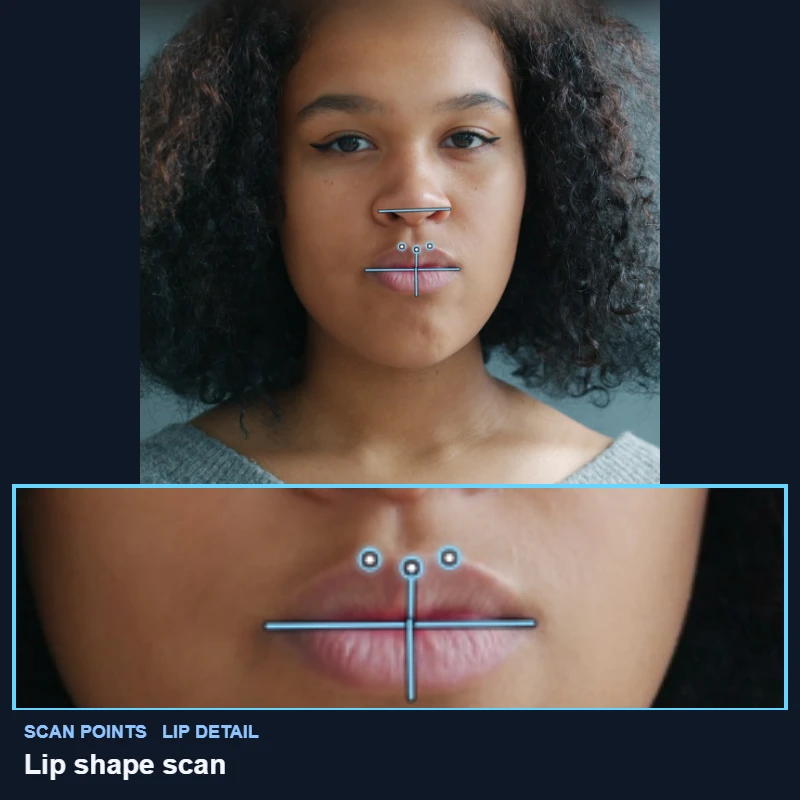
Your smile matters outside the rating. This article explains what whitening can change and its limits, rather than promising a score increase. The share card uses your scan photo; it does not reveal teeth hidden in that photo.
What do teeth signal about health?
The perception literature is careful here, and so should we be. A 2011 review in Philosophical Transactions of the Royal Society B sets out that raters respond to cues of health and condition, with skin among the clearest examples. A 2007 study on female facial skin found that evenness of colour, with shape held constant, changed how healthy, young and attractive a face was judged.
Neither paper is about teeth, and we are not going to pretend it is. What they support is an analogy: viewers read colour and homogeneity as condition, and a smile shows a second surface where colour and evenness are on display. Uneven, stained or greyed teeth are plausibly read the same way uneven skin is, as a cue about health and care. That is a reasoned extension, not a measured finding, and our library holds no rater study on tooth shade and attractiveness. The dental evidence we do hold is about whether whitening works and what it costs, which is the next section.
What does whitening actually change?
Tooth colour has two layers. Surface stains sit on and in the outer enamel and come from coffee, tea, red wine, tobacco and time; polishing and mild abrasives remove some of them, which is what a hygienist's clean and most “whitening” toothpastes do. Intrinsic colour is the shade of the tooth itself, set by the dentine under the enamel, and it yellows and greys with age. Only peroxide-based bleaching reaches it, by diffusing through the enamel and breaking down the coloured compounds inside.
So the honest expectation is this. A hygienist's clean removes surface stain and is the first step regardless. Peroxide bleaching lightens the tooth by a few shades over one to a few weeks, more for yellow teeth than grey ones, and the effect fades over months to a couple of years depending on diet and smoking. Whitening toothpaste keeps a clean tooth clean; it does not bleach.
Dentist-supervised or over-the-counter?
| Route | What it does | Trade-off |
|---|---|---|
| Hygienist clean or polish | Removes surface stain and plaque | No bleaching; the correct first step |
| Dentist-made trays with peroxide gel, at home | Bleaches intrinsic colour over days to weeks | Higher concentrations, fitted trays, sensitivity managed by a professional; costs more |
| In-surgery bleaching | Fastest shade change in a session or two | Highest sensitivity risk; results often maintained with trays anyway |
| Over-the-counter strips or gels | Bleaches, at lower concentrations | Uneven contact, gum contact, sensitivity; check that the product is legally sold where you live |
| Whitening toothpaste, charcoal, oil pulling | Surface stain at best | Charcoal is abrasive and no better than toothpaste; oil pulling has no whitening evidence |
Two practical notes. First, a dentist checks the reason for the colour before bleaching: a grey tooth from an old injury or a filling will not bleach like the ones beside it, and bleaching over untreated decay hurts. Second, sensitivity is common, temporary and dose-related; desensitising toothpaste before and during a course, shorter contact and lower concentration all reduce it, and a professional adjusts these for you where a strip cannot.
What does whitening not do?
It does not change alignment, crowding, gaps, tooth size or the gum line. Those are orthodontics and restorative dentistry, they are a dentist's conversation, and BecomeTen does not recommend procedures at any tier. It does not whiten crowns, veneers or fillings, so a bleached tooth next to an old filling can end up two colours. And it does not fix the thing people most often mean by “my smile”: the shape of the mouth and the lower third, which the rating does read, and which body fat, posture and grooming touch.
It also does not last. Bleached enamel picks up stain like any other, and the people who keep a result are the ones who clean regularly, drink staining drinks in one go or with a meal rather than sipping them for hours, and do not smoke, which is on the lifestyle page for reasons well beyond teeth.
Where does this sit in a BecomeTen plan?
Nowhere in the score, and near the top of the cheap, real-world list. Because the scan never sees teeth, the report cannot tag a teeth trait, and the plan will not list whitening as a step toward the potential score. Think of it the way the looksmaxxing guide frames grooming: composition that changes how you present, not a trait the model measures. A hygienist visit and a dentist's opinion on bleaching are cheaper than most skincare, and their effect is visible in every photo except the one you send us.
Neutral expression, mouth closed. The teeth are for everyone else.
Questions
Does whitening toothpaste actually whiten teeth?
It removes and slows surface stain, which can make a tooth look cleaner, and that is the whole of the effect. It does not reach the intrinsic colour of the tooth, because the peroxide, if any, is too dilute and in contact for seconds. For an actual shade change you need a peroxide gel or strip held against the tooth for the time the product specifies.
How long does teeth whitening last?
Usually months to a couple of years before the shade drifts back toward where it started, faster with coffee, tea, red wine and tobacco. Most dentists keep the trays from a supervised course and top up for a few nights when needed. A hygienist clean between courses keeps surface stain off, which is often what people notice first.
Are whitening strips safe for enamel?
Used as directed, peroxide bleaching does not remove enamel; the recurring side effects in the reviews are temporary sensitivity and gum irritation from gel contact, both dose-related. The enamel damage comes from abrasives like charcoal and from acidic home remedies. Buy products that are legal to sell where you live and stop if sensitivity becomes sharp rather than mild.
Will white teeth raise my BecomeTen score?
No, because the scan is taken with a closed mouth and neutral expression, and there is no teeth trait in the rubric. Whitening changes how you read in every other photo and in person, which is what the plan is ultimately for. It is a real-life lever, not a score lever, and the report will not pretend otherwise.
Sources
- 1.Facial attractiveness: evolutionary based research — Philosophical Transactions of the Royal Society B (2011)(Opens in a new window)
- 2.Color homogeneity and visual perception of age, health, and attractiveness of female facial skin — Journal of the American Academy of Dermatology (2007)(Opens in a new window)
- 3.Assessment of color changes and adverse effects of over-the-counter bleaching protocols: a systematic review and network meta-analysis — Clinical Oral Investigations (2024)(Opens in a new window)