Tool · Harmony
Lip shape test: what is my lip shape?
This lip shape test reads your lips from one photo, in your browser: how full they are against the width of your mouth, how the height splits between upper and lower lip, how wide the mouth is and how defined the cupid's bow is. It names the closest shape, full, thin, top-heavy, bottom-heavy, wide, heart or balanced, with the numbers behind it.
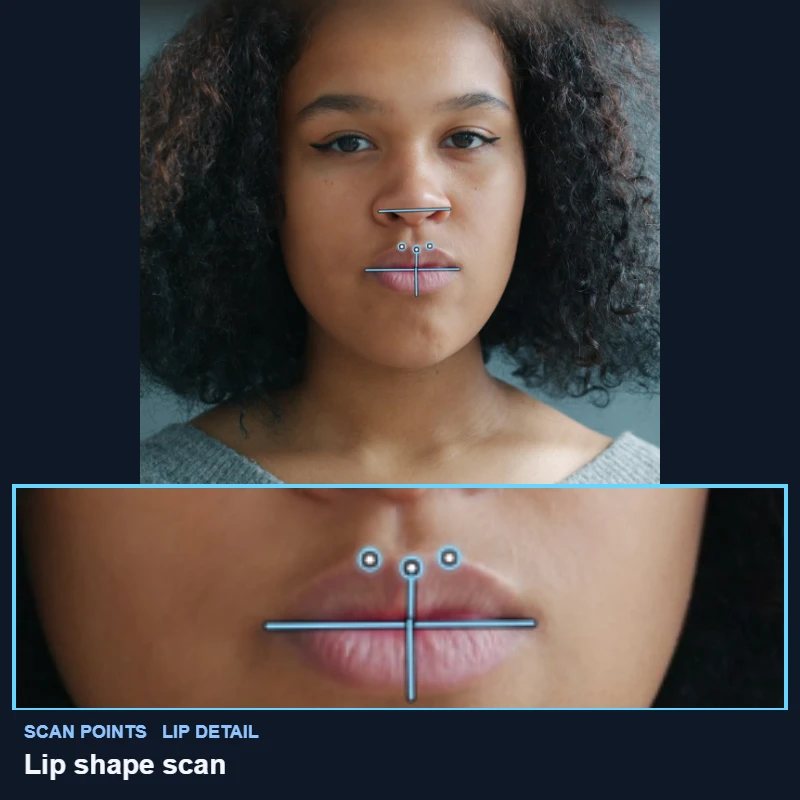
Example result
The lip outline and proportions the lip shape tool measures, on a demo portrait. Scan guides are enlarged here so you can see what the tool reads.
Lip shape detector
- Even light
- Neutral expression
- Phone at eye level
- Clean background
- Even lightFace a window. No harsh shadows from above.
- Neutral expressionNo smile, no makeup. Hair off your forehead.
- Phone at eye levelShoulders to top of head. Chin neither up nor down — angle can fake a sharper jaw.
- Clean backgroundPlain wall or neutral space.
Embed this test on your siteFree, no sign-up
Paste this where you want the lip shape test: what is my lip shape? to appear: a blog post, a forum signature page, a barber's or clinic's site. It runs in your visitor's browser and never uploads their photo, so there is nothing to add to your privacy policy for it.
What are the lip shapes?
Lip shape names come from makeup and cosmetic practice rather than anatomy textbooks, and they describe a handful of measurable things. The main one is fullness: the height of both lips against the width of the mouth. The second is balance: most lower lips are taller than the upper, and an upper lip that takes about 40 % of the total height, the upper-to-lower ratio of about 1 : 1.6 that is often quoted, reads as typical. The third is the width of the mouth against the nose, and the fourth is the cupid's bow, the two peaks in the middle of the upper lip.
| Shape | What stands out | How it tends to read |
|---|---|---|
| Balanced | Close to typical on every measure | The ordinary case |
| Full | Tall lips for the mouth width | Youthful, soft |
| Thin | Short lips for the mouth width | Neat, defined |
| Top-heavy | Upper lip unusually tall | Pouty, often a pronounced bow |
| Bottom-heavy | Lower lip clearly taller than usual | Full lower lip, softer upper |
| Wide | Mouth wide against the nose | Broad smile |
| Heart | Pronounced cupid's bow | Defined upper lip, heart outline |
How the lip shape test works
A face mesh runs on your photo on your device and finds the outline of both lips, the corners of the mouth, the two peaks of the cupid's bow and the sides of the nose. The tool reads four numbers: lip height over mouth width, the upper lip's share of the lip height, mouth width over nose width, and how far the bow's peaks rise above the dip between them. Each is compared with the typical value measured on real frontal photos run through the same mesh, and the shape is the pattern your four readings sit closest to.
If two shapes are nearly as close, the result says so and names both. Real lips are often between labels, for example full and top-heavy at once, and the numbers shown with the result let you see which way yours lean. Nothing is uploaded, and the photo is gone when you close the page.
How to take the photo for a lip shape reading
- Mouth closed and relaxed. Lips gently together, not pressed. A smile stretches the mouth wider and thins both lips; pursing makes them look fuller.
- No lip liner or gloss. Liner drawn outside the natural edge changes the outline the mesh reads.
- Straight on, camera at mouth or eye level. A camera above you shortens the lower lip; below you shortens the upper.
- Even front light. Shadow under the lower lip moves where the mesh puts its edge.
What is the ideal lip ratio?
The figure most often quoted is an upper lip to lower lip ratio of about 1 : 1.6, so the lower lip is a little over one and a half times the height of the upper. It comes from aesthetic practice and averages of faces rated attractive, not from a single definitive study, and a wide range around it looks natural. In our calibration photos the typical upper lip took about 39 % of the total lip height, which sits right on that ratio.
The research on facial attractiveness supports averageness, symmetry and cues of youth and health, and full lips are one of the features that read as youthful, particularly in female faces. That is a tendency, not a rule. The facial thirds calculator shows the related split of the lower face, lips against chin, and the philtrum length entry covers the distance above the upper lip.
Can you change your lip shape?
The size of the lips is set by the tissue and by the teeth and jaw behind them, and no exercise, suction device or plumping trick changes it lastingly. BecomeTen does not recommend filler or surgery. What changes how lips read is workable: liner traced just on the natural edge defines a soft bow, a slightly lighter shade in the centre of the lower lip adds apparent fullness, hydration smooths the surface, and a trimmed moustache or clean upper-lip area shows the upper lip's real height.
Questions
What is the most common lip shape?
Lips close to typical on every measure, which the test calls balanced, with a lower lip a little taller than the upper. Among the named shapes, a slightly full or slightly bottom-heavy reading is common. Clearly thin, clearly wide or strongly heart-shaped lips are less common, which is what makes them distinctive.
How do I know if my lips are thin or full?
Compare the height of both lips together with the width of your mouth, relaxed and closed. The test does this from landmarks and compares the result with real photos: clearly taller than typical reads full, clearly shorter reads thin. Liner, gloss and a smile all shift the reading, so test bare and relaxed.
What does a top-heavy lip mean?
It means the upper lip is taller than usual relative to the lower, so the split is closer to even or the upper lip is larger. It often comes with a pronounced cupid's bow and reads as pouty. It is a normal variation; the typical pattern is a lower lip about one and a half times the upper.