Journal · Composition · lower third
Eyebrows, beard and the perceived jaw: how grooming redraws a face
Eyebrows and a beard do not change bone, but they redraw the outlines a viewer reads. Brow shape sets where the eye area appears to sit; beard density and its edges draw the jaw and chin the eye sees. BecomeTen tags both as workable composition, with the evidence level marked as consensus rather than trials.
Eye shape, spacing and the surrounding frame.
Explore eye areaInside this article
Find the part you need.Why does grooming count as composition, not structure?
Brows frame the eyes; a beard frames the jaw. Tidying either changes the visible outline without changing the bone underneath.
BecomeTen calls this composition: grooming, hair and camera setup that change how a face appears. The looksmaxxing guide separates these choices from skin changes and structural features such as the mandible.
What does brow shape do to the eye area?
The brow is read together with the eye beneath it, so its shape changes what the eye appears to be doing. Three things matter. The height of the brow above the lid sets how much upper eyelid shows: a low, heavy brow hoods the lid and reads as deep-set; a brow lifted high by plucking exposes more lid and reads as more open, and in men as more surprised.
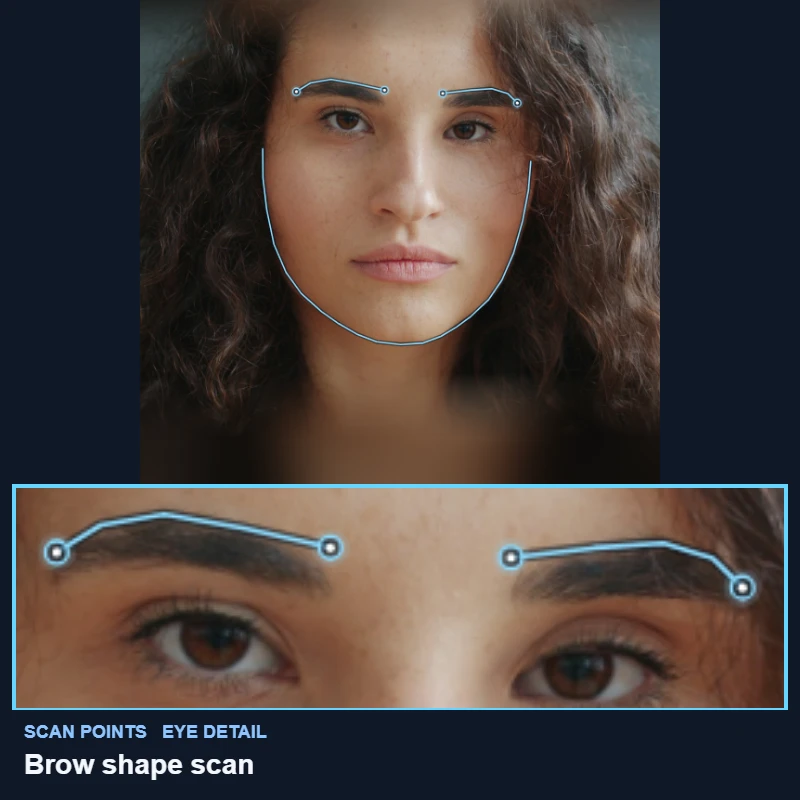
The angle of the brow tail interacts with canthal tilt. A tail that rises toward the temple echoes a positive tilt and makes a neutral tilt read slightly upward; a tail that drops below the outer corner of the eye pulls the whole eye area down and makes even a neutral tilt read negative. The tilt itself, set by where the outer corner sits, does not change; the impression does.
Density is the third. A sparse brow lets the bony brow ridge show through and reads older; a fuller brow gives the eye area a clear top edge. For most men the useful work is tidying rather than shaping: clearing the bridge, trimming length, removing strays below the arch, and leaving the natural line alone.
How does a beard draw the jaw outline?
A beard is a drawn line. Where its edges sit, the viewer assumes the jaw sits, because in a photograph the edge of the dark region and the edge of the bone are indistinguishable. This gives three separate effects, and it helps to keep them apart.
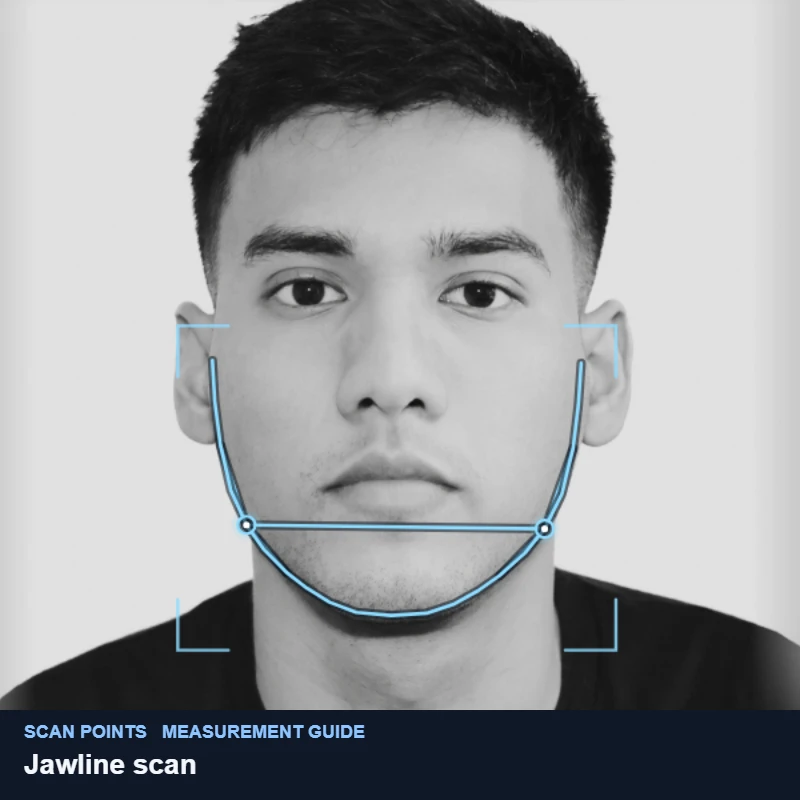
- Chin projection. Hair on the chin adds visible depth in profile and in three-quarter view, so a recessed chin reads less recessed. This is the largest and most reliable of the three.
- Jaw angle and width. Keeping the beard dense at the angle of the jaw and fading it above the cheekbone makes the outline of the mandible appear more defined and, if the beard is kept wider at the angle, slightly squarer.
- The neck. A dark beard along the underside of the jaw hides the transition from jaw to neck, which is where submental fat shows. It does not remove the fat; it removes the edge that reveals it.
Two limits. A beard cannot make a narrow jaw read wide if the beard itself grows narrow; density is decided by follicles, and patchy growth draws a patchy line. And a beard hides skin, so a plan that leans on it is spending the skin area's evidence for the jaw area's impression. For some faces that is a good trade; the report will say which.
What are the practical rules?
These are the rules a barber would give, written so they can be checked in a mirror. They come from consensus, not trials, and the next section says so; they are here because they are consistent and cheap to test.
- Fade below the jaw. Keep full density along the jawline and let it thin on the neck, so the darkest edge sits where you want the jaw read.
- Neckline at the hyoid. Set the lower edge about a finger or two above the Adam's apple, roughly at the hyoid crease where the underside of the jaw meets the neck, not high on the jaw and not down the throat. Too high shortens the jaw; too low blurs it into the neck.
- Cheek line low and natural. A cheek line shaved high and straight exposes the flat of the cheek and narrows the lower face; follow the natural upper edge and only tidy it.
- Brow tail not below the outer corner. The tail should end level with or slightly above the outer corner of the eye. Trim length rather than plucking the tail shorter.
- Clear the bridge, keep the arch. Remove hair between the brows and strays below the natural line; leave the shape and thickness the brow grows in.
- Rescan clean-shaven once. If you want the structural bands, scan without the beard once so the report sees the jaw; then decide what the beard is for.
Why is the evidence level consensus rather than trial-backed?
Because there are no trials. Nobody has randomised men to beard shapes and had strangers rate their jaws, and nobody has done it for brow tails either. What exists is the perception literature on the underlying traits, plus a long professional consensus among barbers and stylists about which lines flatter which faces. BecomeTen labels plan steps with an evidence level, and for brows and beard that level is “no studies”: the advice is barber and stylist consensus. We would rather write that than dress up a barber's rule as a finding.
That distinction matters for how you read the plan. A step tagged evidence-based, such as sunscreen, has a randomised trial behind it. A step tagged consensus, such as a beard fade, has a mechanism and a lot of practice behind it and no measurement. Both can be worth doing; only one has a known effect size, and even that one is in the source paper, not in a score.
How does BecomeTen tag brows and beard in a report?
Both are tagged workable, because both can be changed by the person in the photo within weeks. They are among the few workable items that touch the eye area and the jaw area, whose non-surgical caps (eyes +10, jaw +14) are well below skin and hair, so they often appear early in a plan for a face whose weak points are structural. What the plan will not do is claim that a beard fixes a recessed chin or that a brow trim changes canthal tilt; it will say the trait reads better, and mark the step as composition.
If the jaw area is your lowest, the jawline article ranks the levers with actual evidence, and body fat comes first. Grooming is what you do alongside it, and what you do instead of it when the gap left is bone.
See which of your jaw and eye-area traits are tagged workable, structural or composition.
Questions
Does a beard raise the jaw and chin score on BecomeTen?
It can change how the jaw and chin read in the photo, so the bands the model returns may differ between a bearded and a clean-shaven scan of the same face. The structural traits underneath have not changed, and the report says so. If you want to know your bone, scan clean-shaven once; if you want to know how you present, scan as you go out.
Should I shave for the scan or keep the beard?
Scan both ways once, if you can. A clean-shaven scan lets the model read the mandible, chin and the jaw-to-neck edge honestly and tag the structural bands. A bearded scan shows how the face reads day to day. Do not compare one against the other for progress; compare like with like, as the tracking guide says.
Can eyebrow shaping change a negative canthal tilt?
No. Canthal tilt is set by where the outer corner of the eye sits relative to the inner corner, and no grooming moves it. A brow tail that ends level with or slightly above the outer corner stops the eye area from reading more downward than it is. That is the whole of the effect: the impression, not the trait.
What beard style suits a weak chin?
One with real density on the chin and the underside of the jaw, faded on the neck below the hyoid, and not shaved high on the cheeks. Depth on the chin is what a recessed chin lacks in profile, and hair supplies it visually. Keep the length moderate; a very long beard hides the outline instead of drawing it.