Tool · Harmony
Facial thirds calculator
This facial thirds calculator splits your face at the brows and the base of the nose from one photo, in your browser, and compares the middle third with the lower third. It also shows how the lips divide the lower face. The top third is approximate, because a face mesh cannot find the hairline, so the page says so.
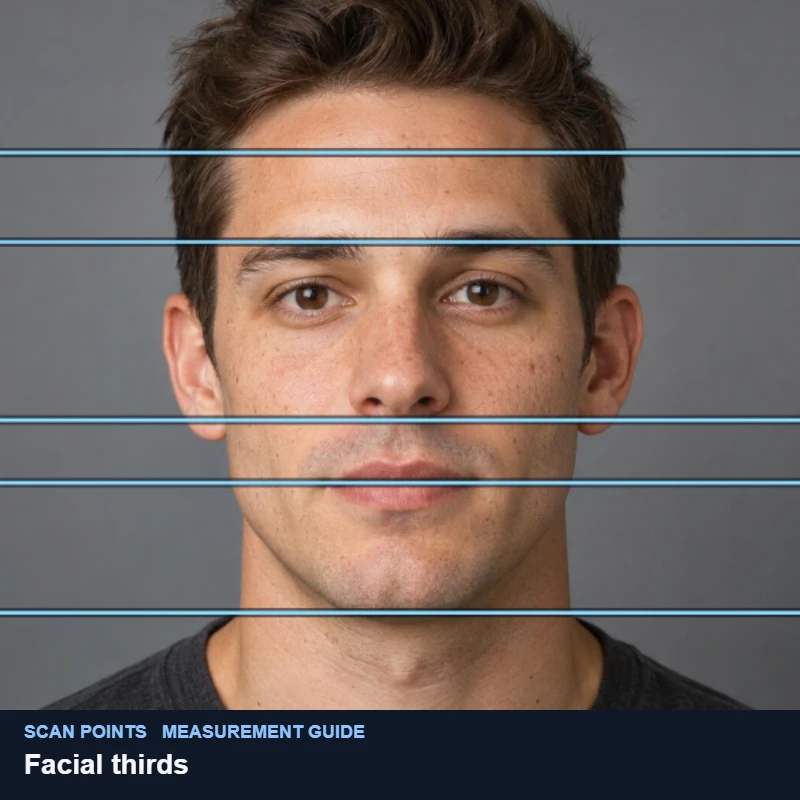
Example result
The three facial thirds the calculator compares, on a demo portrait. Scan guides are enlarged here so you can see what the tool reads.
Facial thirds calculator
- Even light
- Neutral expression
- Phone at eye level
- Clean background
- Even lightFace a window. No harsh shadows from above.
- Neutral expressionNo smile, no makeup. Hair off your forehead.
- Phone at eye levelShoulders to top of head. Chin neither up nor down — angle can fake a sharper jaw.
- Clean backgroundPlain wall or neutral space.
Embed this test on your siteFree, no sign-up
Paste this where you want the facial thirds calculator to appear: a blog post, a forum signature page, a barber's or clinic's site. It runs in your visitor's browser and never uploads their photo, so there is nothing to add to your privacy policy for it.
What are facial thirds?
Facial thirds are the oldest proportion rule in portrait drawing: the face from the hairline to the chin divides into three equal parts, hairline to brows, brows to the base of the nose, and nose to chin. The rule comes from art instruction, not from perception research, but it describes the average adult face well enough that surgeons and orthodontists still use it as a starting point. The facial thirds glossary entry covers where the rule comes from and what the research says about it.
A second rule sits inside the lower third. The upper lip, from the base of the nose to where the lips meet, usually takes about a third of it, and the lower lip and chin take the other two. A lower third that splits evenly reads as a long upper lip or a short chin; one where the chin takes far more reads as a strong, long chin.
What does the calculator measure?
The tool runs a face mesh on your photo, entirely on your device, and reads the height of four lines: the top of the forehead mesh, the brows, the base of the nose and the chin, plus the line where the lips meet. It reports two things. First, the middle third against the lower third, which is the comparison a photo reads well. Second, the share of the lower third taken by the upper lip.
| Reading | What it compares | What to trust |
|---|---|---|
| Thirds | Forehead top, brows, nose base and chin as shares of the height | Middle and lower: yes. Top: no, the mesh stops below the hairline |
| Middle to lower | Brow-to-nose height against nose-to-chin height | The main result: longer middle, balanced or longer lower |
| Lower-third split | Upper lip against lower lip and chin | Reliable with a relaxed, closed mouth |
Why is the top third always short? The mesh covers the face, not the scalp, and its highest point sits on the forehead below where hair starts. Any tool that claims to measure the upper third from a face mesh is guessing the hairline. This one does not guess, so the top third is not rated. If the upper third is the one you care about, a ruler against a photo with the hair pulled back does better than any mesh.
How to take the photo for facial thirds
- Camera at eye level. A camera above the face shortens the lower third; a camera below lengthens it. This is the single biggest error.
- Head level, not tipped. Chin up or down changes the lower third more than anything else about your face does.
- Arm's length or further. A close lens enlarges the nose and shifts the middle third.
- Mouth closed and relaxed. A smile or open lips move the lip line and throw the lower-third split.
- Brows relaxed. Raised brows move the top of the middle third.
Run it on two photos taken the same way. If both land in the same band, trust the band; if they disagree, the photos differ, not your face.
What if my thirds are uneven?
Most faces are uneven by a few percent, and in person nobody sees it. A longer lower third usually means a tall chin or a long jaw, which on men often reads as strong. A longer middle third usually means a long nose or a high midface. Neither is rated as a fault on its own; what the research on attractiveness supports is closeness to the average face as a whole, and a single leaning proportion on an otherwise balanced face costs little.
The thirds are set by bone: the skull, the maxilla and the mandible. Nothing non-surgical changes them, and BecomeTen does not recommend surgery. What changes how they read is framing. A beard lengthens or shortens the lower third depending on its shape. A fringe hides the top third. Brow grooming moves the visible top of the middle third. Body fat under the chin softens the jaw line that ends the lower third.
Questions
Why does the facial thirds calculator show a short upper third for everyone?
Because a face mesh has no hairline. Its highest point sits on the forehead below where the hair starts, so the top third it measures is always shorter than the real one. The tool leaves that figure out and rates only the middle and lower thirds, which a photo reads reliably.
Is a longer lower third bad?
No. A longer lower third usually comes from a tall chin or a long jaw, and on many faces, male faces especially, that reads as strong rather than unbalanced. The research supports closeness to the average face as a whole, not any single third, so one leaning proportion on an otherwise balanced face matters little.
Can a beard or haircut change my facial thirds?
It changes how they read, not the bone. A fuller beard at the chin lengthens the lower third, one kept short under the jaw shortens it, and a fringe hides the upper third. These are framing levers, and the full report suggests the ones that fit the proportions it reads on your photo.