Journal · Composition · evidence
Is there a body fat percentage for a jawline? What the face actually shows
There is no universal body fat percentage that produces a jawline, and we will not give you one. Perception research shows facial adiposity is a strong, readable cue, but where fat sits on a face is individual. What reliably works is a moderate deficit with enough protein and resistance training, judged over months, not a number.
A claim should come with its context.
Evidence levels describe support for a claim, not a guaranteed result.
Read the methodologyInside this article
Find the part you need.Why does a face rater see body fat at all?
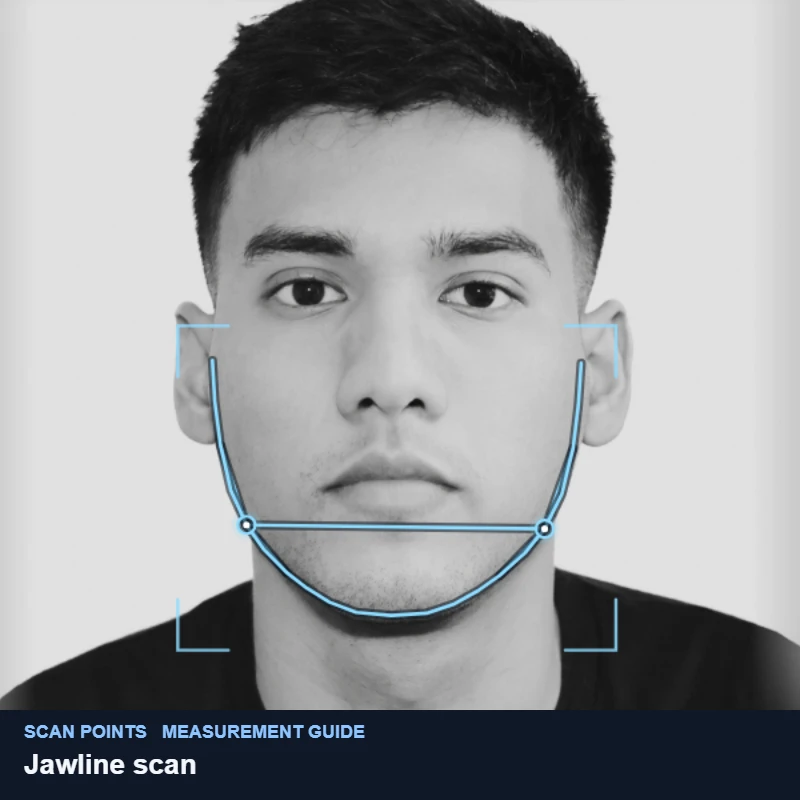
A face carries information about the body it belongs to, and people read it without trying. The layer of soft tissue over the cheekbones, the jaw and under the chin changes the outline of the face, and the outline is one of the first things an observer, or a model, processes.
That is why composition shows up in BecomeTen as a lever rather than a footnote. Jawline definition and submental definition are both tagged workable, and for most adults the largest thing that moves them is the soft-tissue layer, not the bone underneath, as we set out in why body fat is the biggest lever on your jawline.
Is there a body fat percentage that gives you a jawline?
No, and any page that gives you one is guessing. Two people at the same measured body fat can have very different faces, because fat distribution is largely inherited, differs by sex and shifts with age. Some people lose fat from the face first and keep it at the waist; others are lean everywhere except under the chin. The bone matters too: a wider gonial angle or a shorter ramus reads softer at any composition, and no number on a scale changes that.
The 2010 study is useful precisely because it describes cues rather than thresholds. Faces are read as heavier or lighter by relative proportions, and those proportions depend on where your fat sits. So we do not report a body-fat target, we do not estimate your body fat from a photo, and we treat any forum figure as bro-science. What the report does say is whether jawline and submental definition are currently costing you points, and whether they are workable.
What actually changes facial definition
The boring method, done for long enough. A moderate calorie deficit, enough protein to hold muscle while you lose, and resistance training so that what comes off is fat rather than tissue you wanted to keep. This is not a face protocol; it is a body-composition protocol, and the face follows because it cannot do anything else.
- Moderate, not aggressive. Fast loss costs muscle and on the face reads as depletion rather than definition: flatter cheeks, a more visible tear trough, duller skin.
- Protein at every meal. It is the difference between losing fat and losing everything.
- Resistance training two or more times a week. It signals the body to keep muscle while in deficit.
- Patience measured in months. The soft-tissue layer over the jaw is thin and among the last places many people notice change, which is why re-scans are spaced six to eight weeks apart.
One photo. Then stop guessing.
See whether jawline or submental definition is the trait on the table for you.
Water, sodium and the short-term noise
A large share of what people see in the mirror from day to day is not fat. Sodium, alcohol, a poor night and the menstrual cycle all shift fluid, and fluid pools in the face, under the eyes and under the jaw. A salty dinner the night before a scan can soften a jawline that was sharper the previous morning. None of that is composition and none of it should be read as progress or regression.
Hydration cuts the other way. A 2015 study on dietary water found that increasing intake in people who drank little improved measurable skin hydration and biomechanics; the effect was clearest in those starting from a low baseline. Drinking more water does not dissolve facial fat, and nobody should read the study that way, but dehydrated skin reads worse on camera and a well-hydrated face photographs closer to its real composition.
The practical rule is the one in how to track progress: same time of day, same light, ordinary eating the day before, and a trend across scans rather than a verdict from one. Differences within two points are treated as noise for exactly this reason.
Skin during a cut: what nutrition changes
Losing fat well and losing it badly look different on the face, and the difference is mostly skin. A 2012 review in Dermato-Endocrinology on the link between nutrition and skin aging describes how diet quality, adequate protein and micronutrients support skin structure, and how deficiency shows up in the skin. A crash diet removes fat and, at the same time, the inputs the skin needs to look good over it.
So a cut that is also a nutritional collapse can lower a skin score while it raises a jaw score, and the overall barely moves. Eat enough, eat protein, keep vegetables and fats in the diet, and let the deficit come from the excess rather than from everything. The face is the first place a bad diet shows and the first place a decent one does.
The honest caveat about eating and control
A page about body fat and faces needs one plain paragraph. Chasing a leaner face can turn into chasing a number that no longer has anything to do with how you look, and the looksmaxxing space is full of people who went past the point where a deficit helped and kept going. If you are eating far below what your body needs, if food has become a source of fear or a way of feeling in control, or if you cannot see the change in the mirror that the scan and other people can see, that is no longer a composition question and an app should not be the one answering it. Talk to a doctor or a professional who works with eating. We would rather lose a user than help someone hurt themselves for a rating.
What a re-scan will and will not show
As the layer over the mandible thins, jawline and submental definition move first, and the overall score follows through the jaw-and-chin dimension, which carries a +14 non-surgical ceiling in BecomeTen. Cheek definition changes with it. What will not change is the gonial angle, the ramus or the chin projection, because those are bone, and the re-scan prompt is forbidden from reporting bone change between scans for exactly that reason.
A leaner face can also reveal things fat was hiding: a tear trough, asymmetry, a softer chin. That is not a worse face; it is a more accurate reading of the one you have. The point of composition is not to reach a number. It is to see the bone you actually have, and then work honestly with what it is.
Questions
Will losing fat change my gonial angle?
No. The gonial angle is the angle of the jawbone itself and does not change without surgery. What changes is how visible it is: less soft tissue over the angle makes the existing corner sharper in a photo. BecomeTen reports gonial angle as a structural band and will never report it changing between scans, because it does not.
Why does my face look leaner but my score barely moved?
Usually one of three things. The jaw traits moved but skin or eye-area traits dropped alongside them, which is common in an aggressive cut. Or the change is still within the two-point noise band the rating shows neutrally. Or the capture differed: a different camera height or chin tilt on one of the photos changed how the jaw read. Compare the dimension scores, not only the overall.
Does BecomeTen estimate my body fat from the photo?
No. A body-fat figure cannot be read off a face photo with any honesty, so the rating never reports one. What it reports is a band for jawline definition and submental definition, tagged workable, and whether the soft-tissue layer is the likely reason they sit where they do. If you want a real composition number, that is a scale, calipers or a scan, not a selfie.
I am already lean and my jaw is still soft. Should I bulk?
Adding muscle does not change the mandible, so a surplus will not sharpen a jaw that is soft for structural reasons. If you are lean and the jaw traits still read weak, the likely cause is bone shape, and the report will tag them structural rather than workable. Training for a fuller neck and frame is a fine goal in itself; it is not a jawline strategy.
Sources
- 1.Facial adiposity: A cue to health? — Perception (2009)(Opens in a new window)
- 2.Deciphering faces: quantifiable visual cues to weight — Perception (2010)(Opens in a new window)
- 3.Discovering the link between nutrition and skin aging — Dermato-Endocrinology (2012)(Opens in a new window)
- 4.Dietary water affects human skin hydration and biomechanics — Clinical, Cosmetic and Investigational Dermatology (2015)(Opens in a new window)