Tool · Eye area
Upturned eyes test
Upturned eyes have outer corners higher than their inner corners: a positive canthal tilt. This browser test distinguishes a clear upward lift from the slight lift common in adults, alongside level and downturned eyes. A slightly positive reading is therefore labelled slightly lifted, rather than upturned. Your photo stays on your device.
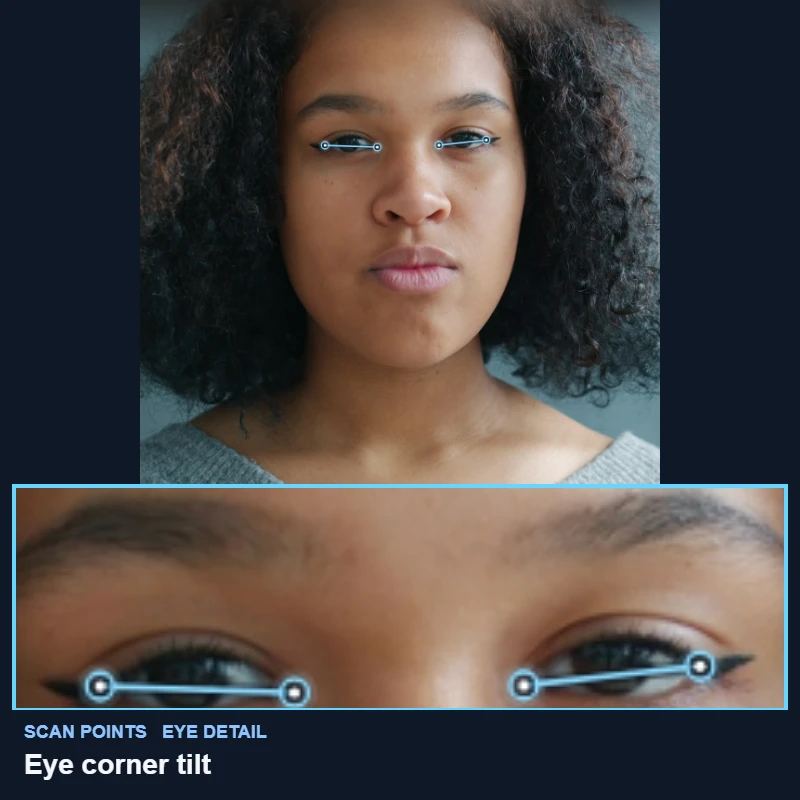
Example result
The eye corners the upturned eyes test reads, on a demo portrait. Scan guides are enlarged here so you can see what the tool reads.
Upturned eyes test
- Even light
- Neutral expression
- Phone at eye level
- Clean background
- Even lightFace a window. No harsh shadows from above.
- Neutral expressionNo smile, no makeup. Hair off your forehead.
- Phone at eye levelShoulders to top of head. Chin neither up nor down — angle can fake a sharper jaw.
- Clean backgroundPlain wall or neutral space.
Embed this test on your siteFree, no sign-up
Paste this where you want the upturned eyes test to appear: a blog post, a forum signature page, a barber's or clinic's site. It runs in your visitor's browser and never uploads their photo, so there is nothing to add to your privacy policy for it.
What are upturned eyes?
Draw a line from the inner corner of each eye to the outer corner. If the outer end rises, the tilt is positive. This tool reserves the label upturned for a clear lift beyond the typical slight upward tilt and calls the milder range slightly lifted. The angle of that line against the horizontal is the canthal tilt, and upturned eyes have a positive one. The look reads lifted and alert, and it is the trait that fox and siren eyes exaggerate; makeup artists create it with liner that flicks up at the outer corner.
It is also common. Most adults have a slightly positive tilt, and in our measurements of real frontal photos the typical eye tilted a little upward. The tool labels that common range slightly lifted rather than clearly upturned. What varies between people is how much, and whether the lift reads at a glance.
| Label | What it means | How it reads |
|---|---|---|
| Upturned | Clearly more lifted than typical | Lifted, alert |
| Slightly lifted | A slight positive tilt | A mild upward lift |
| Level | Close to flat, within the neutral band | Neutral; reads level to most people |
| Downturned | Outer corner clearly lower than the inner | Soft, sometimes tired |
How the upturned eyes test works
A face mesh runs on your photo on your device and finds the inner and outer corner of each eye. The tool removes head roll first, so a tilted head does not count as tilted eyes, then measures the angle of each eye's corner line and averages the two. It answers the question on this page first and shows each eye separately, because the two sides often differ slightly. Nothing is uploaded.
The canthal tilt test shows the same measurement number-first, and the eye type test combines the tilt with the opening and the brow to name fox, siren, doe, hunter or prey eyes.
Photo rules for measuring tilt
- Camera at eye level. A camera above you turns the outer corners up in the image; below you turns them down.
- Relaxed face. A smile lifts the lower lid and the outer corners and fakes an upturned eye.
- No liner. Winged liner draws the tilt you are trying to measure.
- Face square to the camera. A turn changes the far eye's corner line.
Are upturned eyes more attractive?
The forums say yes, and there is some basis: a slight positive tilt is typical of young adult faces, and eyes that turn down at the outer corner can read tired, which the research on perceived tiredness links partly to the eye area. But the effect of tilt alone is modest next to skin, sleep and under-eye condition, and the reviews of facial attractiveness support averageness and symmetry rather than any single angle. A strongly upturned eye is a look, not a score.
Tilt is bone and ligament and does not change with exercises; BecomeTen does not recommend surgery. What changes how it reads is brow shape, the tail of the brow in particular, liner and sleep, which reduces the puffiness that pulls the outer corner down visually.
Questions
Is a positive canthal tilt the same as upturned eyes?
In everyday language they often mean the same thing: the outer corner is higher. This tool makes a finer distinction: a mild upward tilt is slightly lifted, while a clearer lift beyond the typical range is labelled upturned. A positive reading can therefore say slightly lifted without contradicting its measured angle.
Why does one of my eyes tilt up more than the other?
Because faces are not perfectly symmetric, and the corners of the two eyes rarely sit at exactly the same height. A small difference is normal and invisible in person. A head tilted slightly in the photo also exaggerates it, which is why the tool removes head roll before measuring each eye.
Can makeup make downturned eyes look upturned?
It can change how they read. Liner that lifts at the outer corner, shadow blended up toward the brow tail and lashes concentrated at the outer third all draw the eye upward. The corner itself does not move, so test with bare eyes if you want the real tilt.