Journal · Harmony · face shape
The most attractive face shape for men and for women
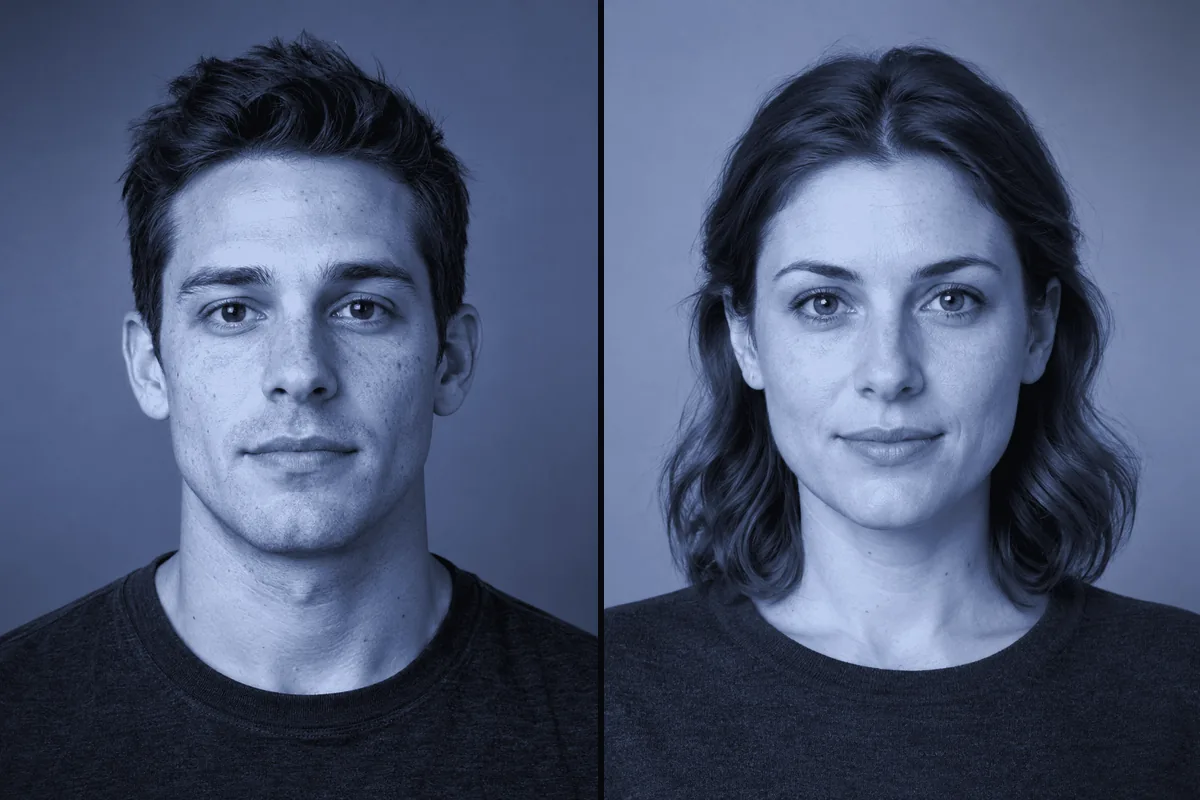
No face shape is the most attractive. Style guides name oval because it is balanced and easy to frame, but research rates the parts inside the outline: symmetry, closeness to the average, sex-typical features, even skin and a lean face. For women, feminine features help consistently; for men, a defined jaw helps, while strong masculinity is a mixed bet.
Inside this article
Find the part you need.Why no study ranks face shapes
Face-shape labels help you choose haircuts and glasses. They describe the outline, not everything inside it. Research instead examines symmetry, proportions, skin and other features; no outline guarantees an attractive face.
Oval is a common styling reference because its outline is balanced and easy to frame. That makes it versatile, not a winner over round, square or heart-shaped faces.
The most attractive face shape for men
When people say a man has a great face shape, they usually mean the lower third: a jaw whose edge is visible from the ear to the chin, a chin that does not recede, and cheekbones that read under the skin. Those are the traits that make a face get called square or oval-with-a-strong-jaw. What the research supports is narrower than the forums claim. A defined jaw and cheekbones read as lean and healthy, and facial fat is one of the most reliably perceived signals in face studies. Strong masculinity on its own, a heavy brow and a very wide jaw, is a mixed bet: some studies find raters prefer it, others prefer a slightly softer male face, and the result shifts with the rater and the context.
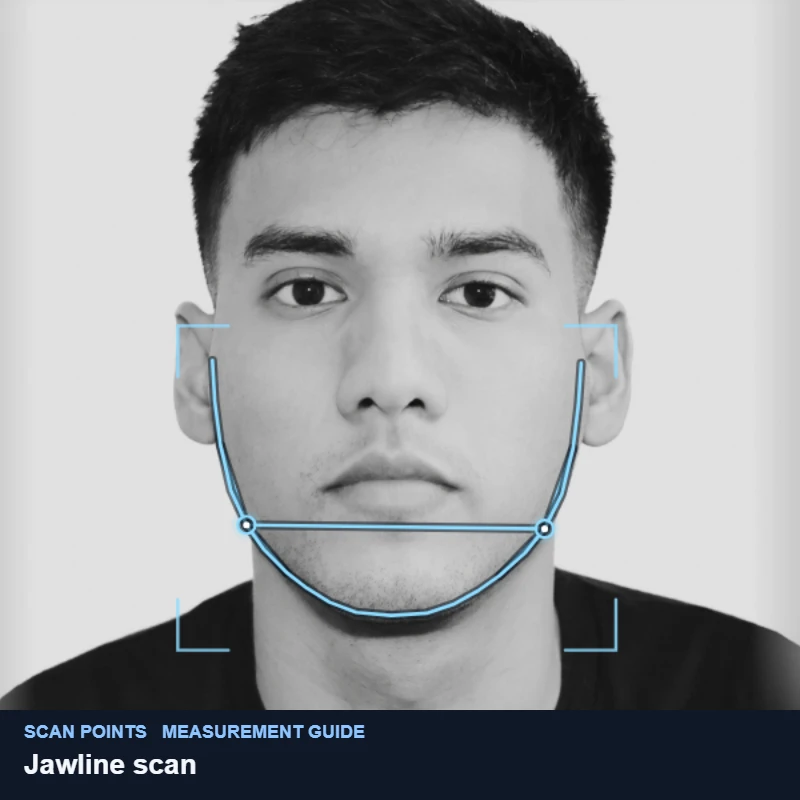
So the honest answer for men is: no shape, but a lean, symmetrical face with a visible jaw edge, whichever outline it has. A long oblong face with a clear jaw rates better than a square one hidden under fat. The jawline score measures the jaw from a photo, and sexual dimorphism explains why more masculine is not automatically better.
The most attractive face shape for women
For female faces the research is more consistent. Feminine features, fuller lips, higher brows, fuller cheeks and a smaller lower face, raise ratings across studies far more reliably than masculine features do for men. Those features are what make a face get called heart-shaped or oval: a tapering lower face under cheekbones that sit high. That is likely why heart and oval top lists of attractive female face shapes.
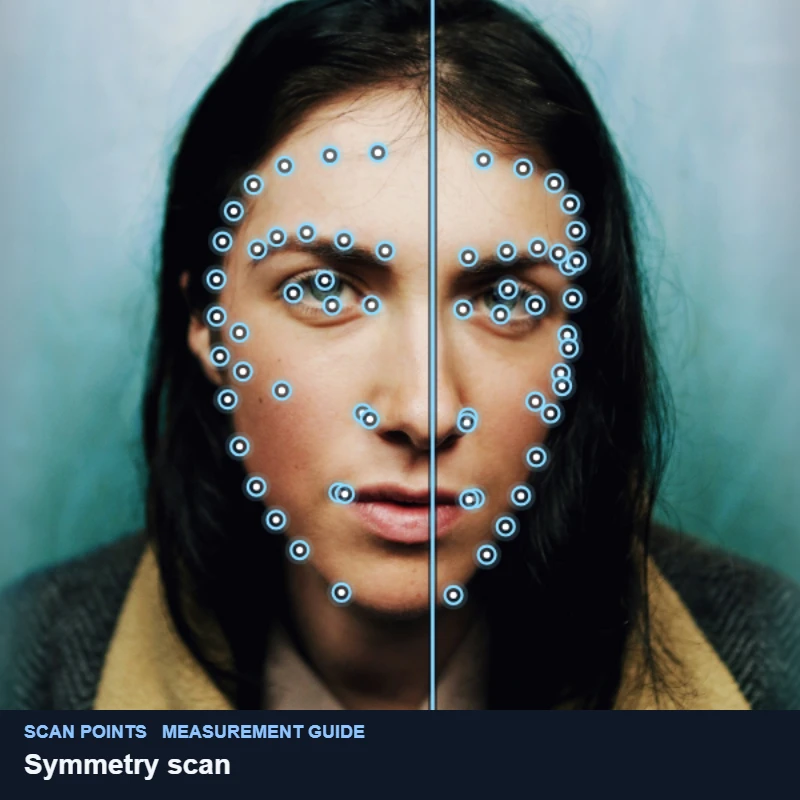
Again the shape is the summary, not the cause. A round face with high cheekbones, even skin and good symmetry is rated well, and a heart outline with uneven skin is not rescued by its shape. The parts worth checking are the zygomatic bones, how even the skin is and how balanced the facial thirds are.
Where fWHR fits in
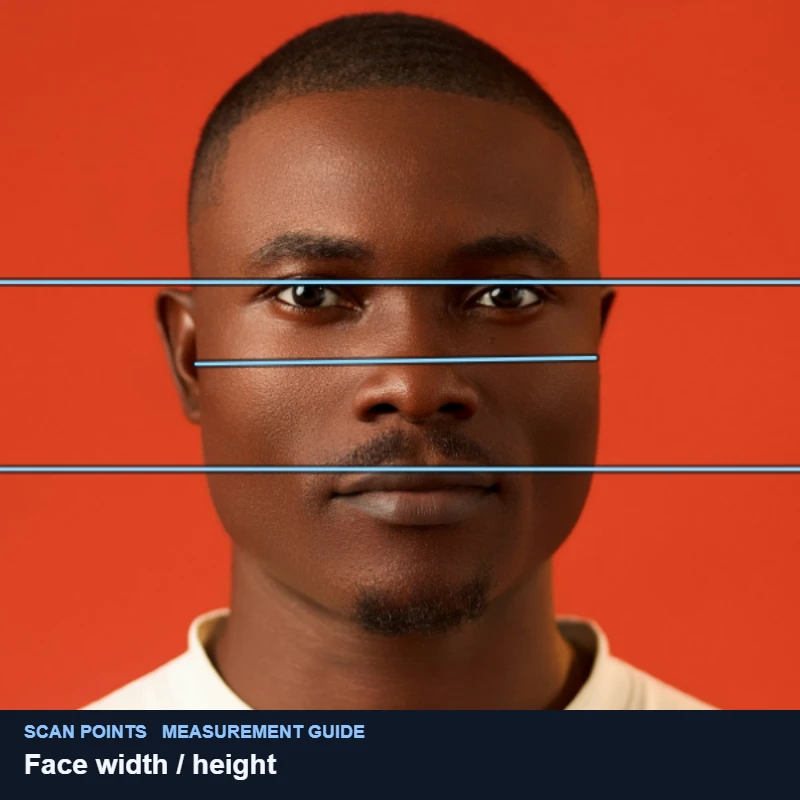
fWHR, the facial width-to-height ratio, is the forum's favourite number for male face shape: cheekbone width divided by the height of the midface, from the eyelids to the upper lip. A high fWHR describes a broad, short midface, which is what a wide square face looks like. The research behind it is about perceived dominance and aggression, not attractiveness, and even that link replicates unevenly. fWHR also rises with facial fat, because fat over the cheekbones adds width without changing the bone. Getting leaner usually lowers it slightly while making the face read sharper.
If you want the number anyway, the fWHR calculator measures it from one photo in your browser and shows whether the width or the height drives it. What is a good fWHR explains why there is no target value, and the facial ratios tool reads it next to the other common proportions.
Each shape and what it does well
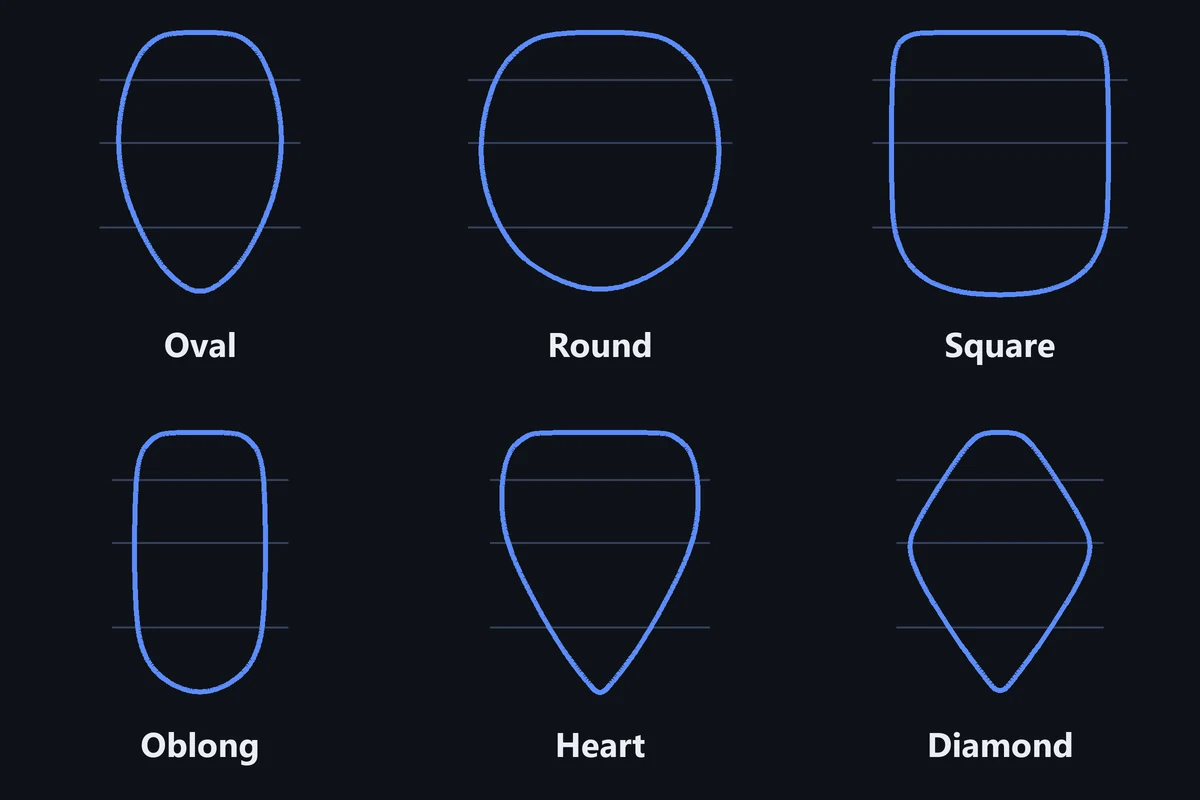
| Shape | How it usually reads | Framing convention |
|---|---|---|
| Oval | Balanced; the reference shape in styling | Most cuts and frames work (oval face hairstyles) |
| Round | Soft and youthful; width and length similar | Height on top, angular frames (round face hairstyles) |
| Square | Strong jaw; reads masculine on men | Keep the jaw, soften the corners (square face hairstyles) |
| Oblong | Long and lean | Width at the sides, no extra height (oblong face hairstyles) |
| Heart | Wide cheekbones, tapering chin; reads feminine | Volume near the jaw (heart face hairstyles) |
| Diamond | Cheekbones widest, narrow forehead and chin | Width at the forehead and chin (diamond face hairstyles) |
The framing column is a set of style rules of thumb, not research. They work by adding visual width where a face is narrow, length where it is short, or softening strong angles. Glasses follow the same logic; see glasses by face shape.
What actually changes how your face shape reads
- Facial fat. It rounds the jaw and widens the cheeks, which can move a face from square or oval towards round. It is the one part of the outline an adult can change; see body fat and the jawline.
- Hair and beard. They change the outline the eye sees without touching the face. A beard can square a round jaw or lengthen a short chin; the beard style tool suggests one for your shape.
- The photo. A phone held close makes the middle of the face look bigger and the sides smaller, which turns a square face oval on camera. Shoot from arm's length or further, at eye level; photo quality, light, angle and lens covers why.
- Bone. Cheekbone width, jaw width and face length are set by the skeleton. Nothing non-surgical changes them, and BecomeTen does not recommend surgery.
How to check your own face
- Take one photo straight on, at arm's length or further, in even light, with a neutral expression and hair off the face.
- Run the face shape detector to get the label, as a starting point for hair and glasses.
- Run the fWHR calculator and the facial harmony tool to see the proportions the label summarises.
- For a rating of everything the research actually weighs, symmetry, skin, jaw, eyes and proportions together, use the full scan.
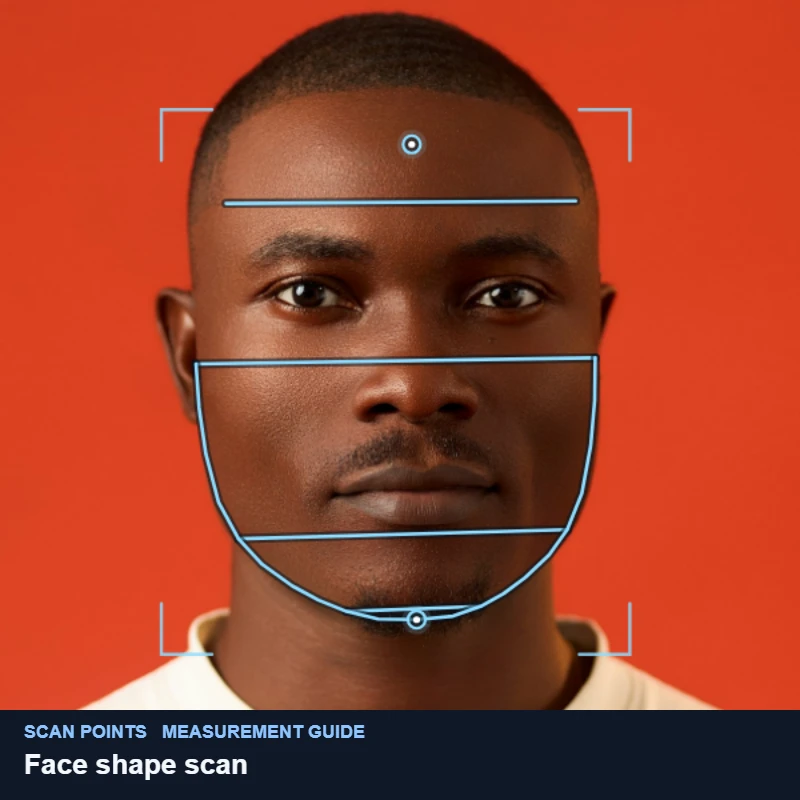
Free score and tier from one photo, with what is workable and what is structural.
Questions
Is a square face attractive on a man?
Often, because a square outline usually means a jaw edge that is visible, which reads as lean and healthy. But the attractiveness comes from the definition, symmetry and skin, not the shape. A very wide, heavy square face is a strong masculine cue, and studies disagree on whether raters prefer that or a slightly softer male face.
Is a round face unattractive?
No. Round describes an outline where width and length are similar, and many round faces are rated highly. Part of a round look can be facial fat, which getting leaner changes; the rest is bone and frames well with height on top and angular glasses. Symmetry and skin matter more than the label.
Can I change my face shape?
Only the soft-tissue part. Body fat changes how round the cheeks and jaw look, and hair, beard and glasses change the outline the eye reads. The bone that sets cheekbone width, jaw width and face length does not change without surgery, and BecomeTen does not recommend surgery.
Does a high fWHR make a face more attractive?
There is no good evidence that it does. fWHR research is about perceived dominance, with mixed replication, and the ratio partly tracks facial fat. A lean face with a clear jaw usually rates better even if its fWHR is a little lower. The fWHR calculator measures yours from one photo if you want the number.
Sources
- 1.Human (Homo sapiens) facial attractiveness and sexual selection: the role of symmetry and averageness — Journal of Comparative Psychology (1994)(Opens in a new window)
- 2.The evolutionary psychology of facial beauty — Annual Review of Psychology (2006)(Opens in a new window)
- 3.Facial attractiveness: evolutionary based research — Philosophical Transactions of the Royal Society B (2011)(Opens in a new window)
- 4.Facial adiposity: A cue to health? — Perception (2009)(Opens in a new window)
- 5.Deciphering faces: quantifiable visual cues to weight — Perception (2010)(Opens in a new window)